Budgeting a Clipping Campaign: Floor, Split and Speed
A campaign budget is one number you set and two you have to live with: how it splits between accounts, and how fast it empties. Why the floor is a view count rather than a figure, and what a budget that empties by lunch costs you.

You type a round number into the total, because round numbers feel like decisions. The total is the easy part. Two harder questions come after it. How much of that total one account will take, and how fast the money will leave.
What it costs to promote a song is the arithmetic. This is the shape of the money: how low it can sensibly go, where most of it ends up, and what a week of budget spent in an afternoon does to the run after it.
A budget is one number and two consequences
The total is the most you are willing to commit before you know whether the hook travels, and it is the only one of the three you type in. The other two are what happens to it: how it splits between accounts, and how fast it empties.
Most people decide the first and never think about the other two. Then the run behaves in a way nobody planned, and the channel gets the blame.
Two campaigns with the same total and different speeds are not the same campaign. One is a test you can read. The other is a weekend you paid for.
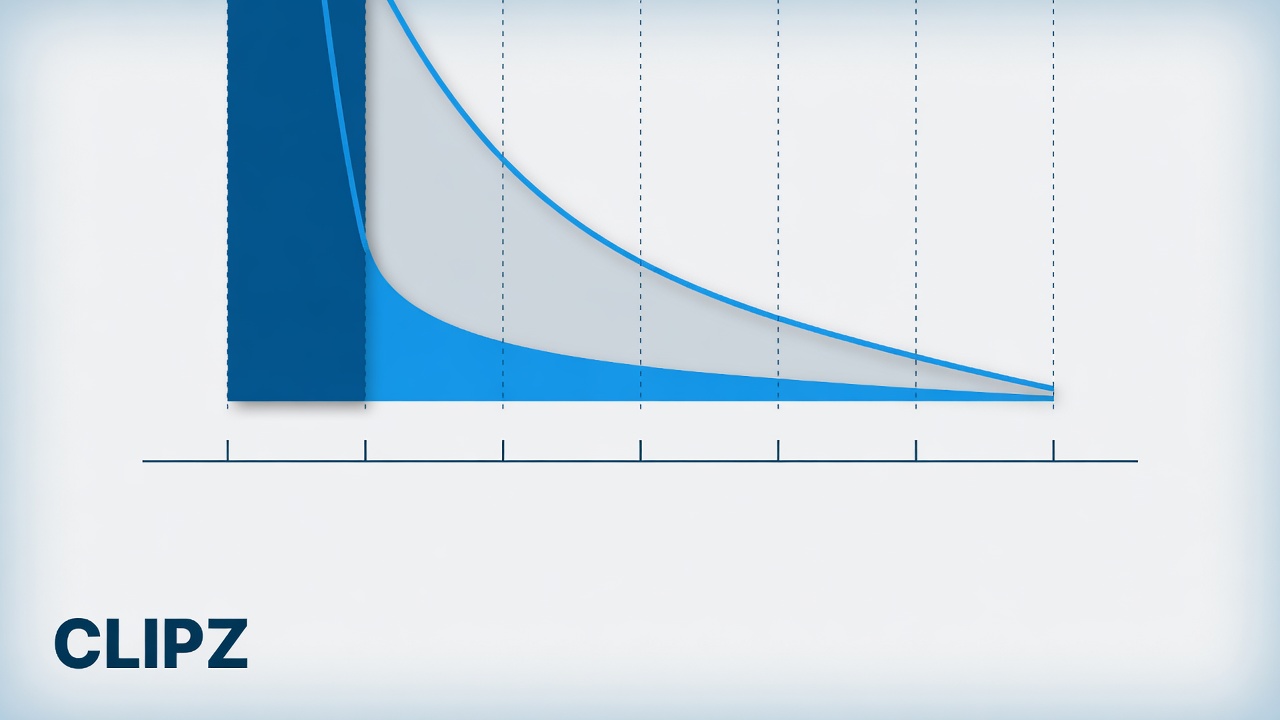
The floor is the point where a run stops being a coin flip
Below a certain size a campaign is not a test. You get a handful of posts, one of them does something, and you cannot tell whether that was the hook or the day.
The floor is a view count before it is a figure in dollars. It is whatever buys enough clips that the result has a shape, which usually means a few hundred thousand views, and the money follows from your rate. What a verified view should cost is where that rate comes from.
If the money only reaches the coin flip, hold it and run once properly. Two runs that both ended early teach you less than one that finished.
A budget does not spread on its own, it concentrates
Most of the money goes to a few clippers, because most of the views come from a few clips. That is not a failure, and not someone gaming you. It is what a working feed looks like.
You still have to decide whether you wanted it. If the goal was one big moment, let it run. If the goal was the sound turning up in forty different rooms, the brief and the rate are what you have to work with. On a brand or music run priced per view there is no per-account ceiling to set, so the split is something you shape rather than dictate. The brief you publish decides who shows up. The rate and the length of the run decide how far the money spreads.
One budget will not give you both.
Speed is the thing nobody predicts
The money goes at whatever speed the feed allows, and a live hook can empty a week of budget before lunch.
That reads like success. It is the least informative run you will ever pay for. Everything you learned came from one crowd on one day, in whichever countries happened to be awake. None of it tells you what the second week looks like.
The opposite error is quieter. Spread it so thinly that nobody can earn anything worth the edit, and the clips go to a campaign that can. How music clipping campaigns work is the run from brief to first views. Whether that run has a middle at all is mostly decided by the rate and the size of the total.
What underspend and a burst each cost you next time
Most first campaigns end with money left over. That is the normal outcome, not the embarrassing one, and it is information: at your rate, with your rules, this many people were willing to cut.
Underspend is rarely a reach problem. It is a rate sitting under the room, or a brief with one rule too many. What a million views actually costs is the check on whether your rate is in the room at all.
A burst costs you something the invoice does not show. Clippers who cut after the money ran out remember the campaign. The next one fills more slowly, and you will read that as bad luck.
Common questions
What do I do with the money left over at the end of a run?
Spend it on what the run taught you, usually a second cut of the same hook at the same rate with one rule removed. Setting up that next run takes an afternoon. Pushing the leftover into a higher rate on a brief nobody wanted buys the same silence faster.
My whole budget went in a day. Is that not proof it worked?
It proves the rate was generous for that hour. It does not prove the hook travels. Everything you learned came from one crowd on one day. Run the same brief again at the same rate, give it two full weekends, and see whether the second run still looks like the first.
Can I limit how much one account earns?
Not on a brand or music run priced per view. What you set is the total, the rate and the deadline, and the money follows the clips. To spread it wider, widen the brief or raise the rate rather than looking for a per-account setting.
My budget is small. Should I drop the rate to buy more views?
No. A rate under the room does not buy cheaper views. It buys fewer clips and a slower fill. Cut the number of markets or the length of the run instead, and keep the rate worth opening an editor for.