How Clippers Actually Get Paid, Start to Finish
Not the rate, the journey. What happens between picking a campaign and money arriving: the five stages, what each one is waiting on, where payouts slow down, and what you control at every step.
Most explanations of clipper pay stop at the rate. A rate is a number, and a number does not tell you when money arrives, what it is waiting on, or why the amount is sometimes lower than the counter promised.
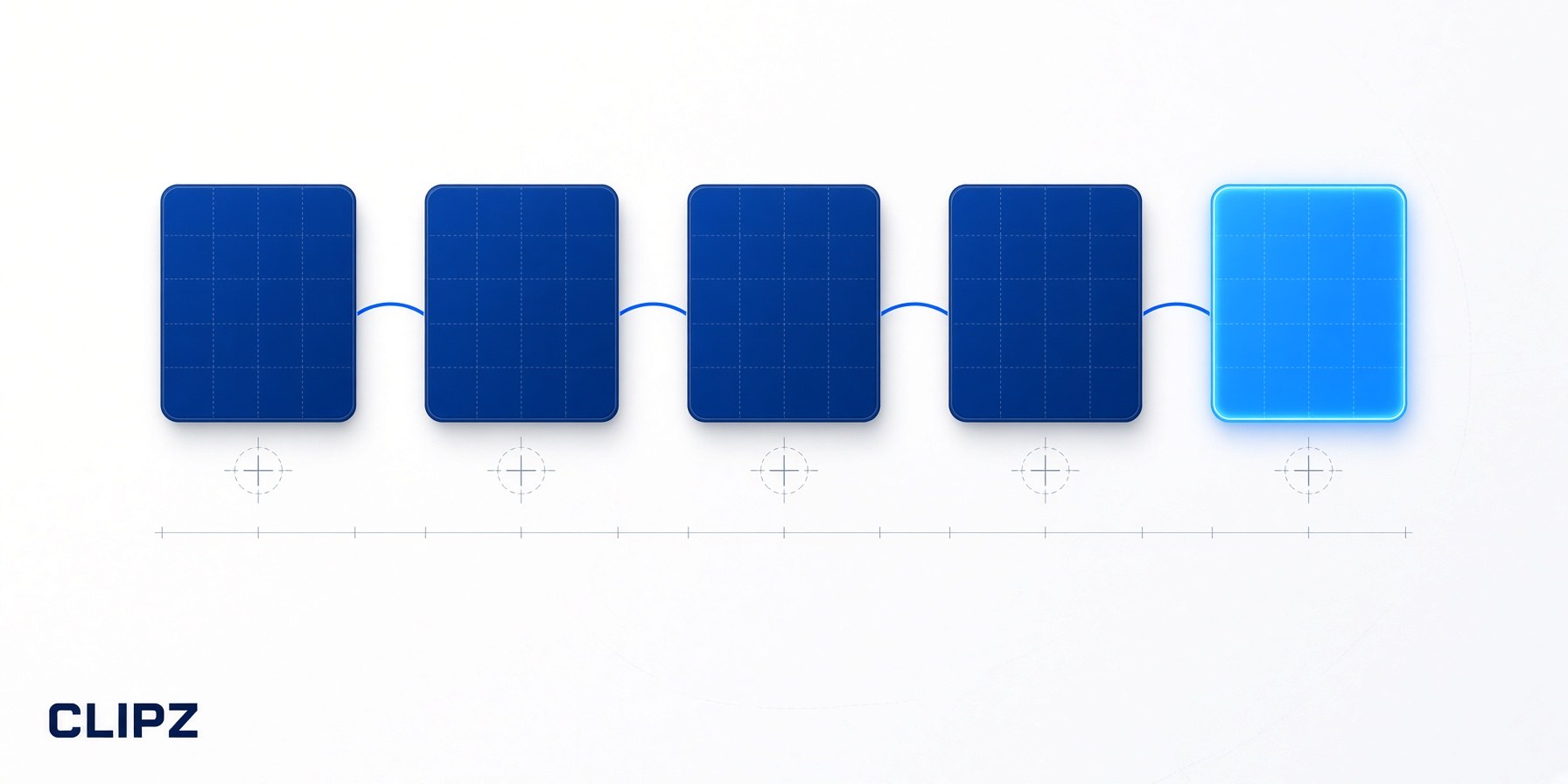
This is the sequence instead. Five stages, what each one is actually waiting for, and what you can do about it.
The five stages, start to finish
Pick. You choose a campaign whose rules match accounts you already post on.
Post. You cut the clip and publish it on your own account, natively, the way you publish anything else.
Submit. You tell the campaign the clip exists by handing over the link.
Review. The submission is checked against the campaign's rules, and either approved or turned down with a reason.
Paid. Approved earnings land in your balance, and from your balance you withdraw.
Nothing here is unusual. What trips people up is not knowing which stage they are sitting in, and therefore not knowing whether to wait or to act.
Picking a campaign you can actually deliver
The most expensive mistake happens here, before you have cut anything.
Read the rules before the rate. Which platforms count. Which countries the campaign wants. What the clip must not contain. Whether there is a minimum length. A high rate on a campaign your accounts cannot satisfy is worth nothing, and you find out after the work.
Match the campaign to accounts you already post on. A new account made for one campaign starts from nothing and behaves unpredictably. An account with existing habits and an existing audience gives the feed something to work with.
And be honest about the material. If you cannot picture the clip before you open the editor, pick a different campaign.
What happens after you submit
This is where the waiting lives, and where most of the frustration comes from, so it is worth being precise about what is going on.
Two things have to settle. The clip has to be checked against the campaign's rules, and the reach has to accumulate and hold. Neither is instant, and the second one is not something anyone can hurry: a clip posted an hour ago has not finished doing whatever it is going to do.
That is also why a payout can be smaller than the number on your screen. Campaigns pay on views that hold up, and a public counter is a generous instrument. Nobody would fund a budget that could be inflated at will, so the two facts are the same fact: the reason the number is checked is the reason there is money behind it.
What you control at this stage: submitting promptly, submitting the right link, and not deleting or editing the post while it is in review.
From approved to withdrawable
Approval moves earnings into your balance. Your balance is not automatically money in your bank; it is money you can now ask for.
Keep the two apart in your head. Earned is what campaigns have credited. Available is what you can withdraw right now. They differ while things are still settling, and reading one as the other is the single most common cause of somebody thinking a payout went missing.
Before your first withdrawal, make sure your payout details are actually correct. A withdrawal that fails on a typo takes far longer to resolve than one that goes out cleanly, and the delay looks identical to a problem on the platform's end from where you are sitting.
Where the money goes out
Several routes, and the right one depends mostly on where you are rather than on which is objectively best.
PayPal is the default for most people: fast, widely available, and familiar.
Bank transfer suits larger amounts and places where PayPal is awkward.
Crypto suits people who already use it and markets where the other two are painful.
Whichever you choose, the withdrawal itself is a transfer between two systems, and transfers take the time transfers take. Weekends and bank holidays are real.
What slows a payout down
In rough order of how often it happens.
The clip is too fresh. Reach has not settled, so nothing can be finalised yet. Waiting is the whole fix.
The submission is incomplete or points at the wrong link. Check it before you submit rather than after.
The post changed after submission. Editing the caption, switching it to private or deleting it mid-review breaks the thing being reviewed.
Payout details do not match. A name that does not match the account, an old address, a typo in an email.
The campaign's rules were not met. The reason comes back with the decision, and it is usually specific enough to fix on the next clip.
Almost none of these are mysteries, and almost all of them are visible from your own side before they cost you anything.
Common questions
How long until I get paid?
Longer than a clip takes to post and shorter than people fear. The bulk of the wait is reach settling, not paperwork, which is why a clip posted yesterday cannot be finalised today no matter who you ask. Once earnings are available, the withdrawal itself moves at the speed of whichever payout route you picked.
Why is my payout lower than my view count?
Because campaigns pay on views that hold up, and the public counter is not the same instrument. This is not a deduction taken from you; it is the basis on which the budget exists at all. If the number on screen were the number paid, no buyer would fund a campaign, and there would be nothing to earn from.
Can I submit the same clip to two campaigns?
No. Each campaign is paying for a clip made for it, and the same post cannot be sold twice. Beyond the rules, it does not work in your favour either: a clip cut for one brief rarely satisfies another well enough to earn properly in both.
What happens if my clip is rejected?
You get the reason, and the reason is usually actionable: wrong platform, missing requirement, something the brief prohibited. Rejection is not a mark against you, and it does not affect other submissions. Read the reason, and treat it as the cheapest feedback you will get, because the next clip is the one it improves.