Venue Clipping: Your Guests Are Already Filming
Restaurants, clubs and hotels spend on ads about the room while the people inside the room film it for free. Venue clipping pays them to post it properly: what it is, what it costs, and how to set it up without it feeling like a stunt.
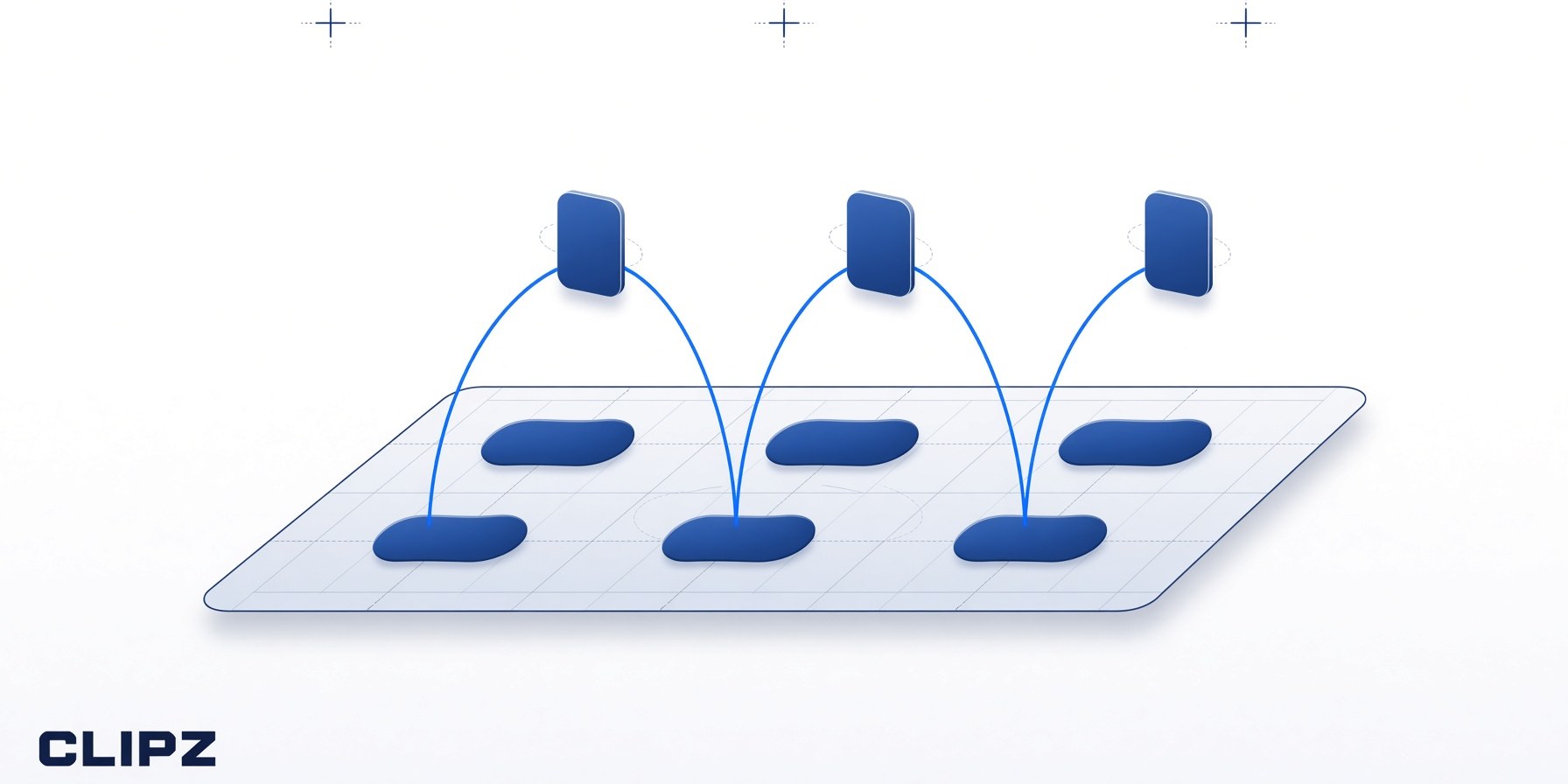
Walk through any decent restaurant on a Friday and count the phones. Then look at what the same restaurant spends on advertising: photographs of the room, taken by someone paid to make it look better than it does, shown to people scrolling past.
The people inside the room are already making the better version. Nobody is asking them to post it, and nobody is paying them when they do.
What venue clipping is
A guest films something at your venue, posts it on their own account, and gets paid for the reach that post earns. You set the budget and the rules. They bring the audience.
It is the same per-view mechanism used for music and brands, pointed at the one group of creators who are physically standing in your business.
The difference from every influencer arrangement you have been pitched: you are not paying one person with a big following to visit. You are paying whoever is already there, at whatever size their following happens to be, for reach that actually landed.
Why a guest clip beats your ad
It is not a matter of taste, it is a matter of who is speaking.
Your ad says the room is good. A guest's clip shows the room being good, filmed by someone with no reason to lie, at the hour it actually looks like that. The second one survives a scroll.
Then there is targeting you cannot buy. A guest's followers are disproportionately people who live nearby, know the area and could plausibly walk in. No ad platform hands you that audience as cleanly as the person who just sat in your dining room.
And it compounds. A room that looks like people enjoy being in it attracts people who want to be in it. That is the oldest mechanism in hospitality, and short-form video is simply the fastest version of it ever built.

What it costs, and what local reach means
The same arithmetic as any per-view campaign: a rate per thousand views, a budget, and it stops when the budget does.
What differs is which views you want. For a venue, a hundred thousand views scattered worldwide is worth considerably less than five thousand views among people within driving distance. Reach is not the metric; reachable reach is.
That changes how you should read the numbers. A clip from a regular with four hundred local followers can be worth more to you than one from a visitor with forty thousand followers in another country. Judge campaigns on whether the audience could plausibly turn up, not on the size of the counter.
Setting it up in your room
The practical part is smaller than it sounds.
Guests need to know the campaign exists at the moment they are already holding the phone. That means the invitation lives where they are looking: on the table, at the bar, by the entrance, in whatever they scan to see the menu. Not in a post they would have to have seen last week.
Staff need one sentence they can say without it sounding like a sales pitch. One sentence, said naturally, does more than any printed card.
And the thing being filmed needs to be worth filming. This is the part venues skip. A campaign will not rescue a room that photographs badly at the hour your guests are in it. Fix the lighting first, then run the campaign.
What to brief, and what never to
Brief the things that protect you: no filming other guests without their say-so, no staff areas, nothing that implies a claim you cannot stand behind. Say what you would rather not see. Say it plainly and say it first.
Do not brief a script. The instant a guest clip sounds written, it stops being a guest clip and becomes an ad with worse production. The value you are buying is that it does not look like marketing, and a script destroys exactly that.
Do not require a face. Plenty of the best venue clips are hands, plates, a room and a sound. Requiring people to appear on camera cuts your participation in half for nothing.
Which venues this works for, and which it does not
It works where there is something to film and a reason people already want to. Restaurants with a room or a dish that photographs well. Clubs and bars, where the crowd is the content. Hotels with a view, a pool, a lobby worth a second look. Anywhere with a queue, a ritual or a moment.
It works badly where the experience is functional rather than memorable, where guests are in and out in four minutes, or where filming would be intrusive by nature. If you cannot picture a guest wanting to film it unprompted, paying them will not create the want.
The honest test: has anyone posted about your venue this month without being asked? If yes, you are paying to amplify something that already happens. If no, that is the problem to solve first.
Common questions
Do guests need a following?
No, and this is the part that surprises venue owners most. Short-form feeds distribute to people who do not follow the poster, so a guest with two hundred followers can reach thousands. What matters is whether the clip is good, not whose account it went out from. That is also why paying per view rather than per post is the right shape here: you are not buying the account, you are buying what the clip did.
Will this feel like a gimmick to my guests?
It does when it is loud. A large sign demanding that people post is a gimmick, and guests read it as one. An invitation that sits quietly where they are already looking, and a staff member who mentions it once without pressing, is not. The tone is the whole difference, and it is entirely within your control.
What if someone posts something unflattering?
Campaigns include approval, so a clip that misses the mark does not earn and does not represent you. Worth being realistic though: people can already post whatever they like about your venue, and most do so without any campaign involved. Running one does not add that risk. It adds a channel where you have a say.
How long should a venue campaign run?
Longer than a launch and shorter than forever. A week is not enough for guests to notice the invitation exists. Running permanently at a flat rate trains regulars to expect it and dulls the effect. Most venues get more out of running it around the periods that matter to them: a new menu, a season, the nights they want to fill.