How to Hire Clippers for Your Brand
You can hire clippers one by one, or you can run a campaign and let them opt in. What to expect from each, what a brief has to contain, and the hiring mistakes that look like a channel problem.

"Hire clippers" sounds like hiring people. Most of the time you do not want people. You want posts.
One-by-one hiring is an influencer roster with a new job title. A campaign is a brief, a rate, a cap, and whoever fits the rules. Clipping versus influencer marketing is the fork. This is how the hiring version actually goes, and when to skip it.
Campaign first, roster later
If you have not run a pay-per-view campaign yet, do not start by DMing clippers. You do not know what your brief is worth, which formats travel, or which countries you actually want. A campaign is a measuring instrument. A roster is a commitment.
Pay-per-view UGC campaigns is the mechanism. Use it until you can describe, in one sentence, what a good clip for you looks like. Then, if you still need named people, hire.
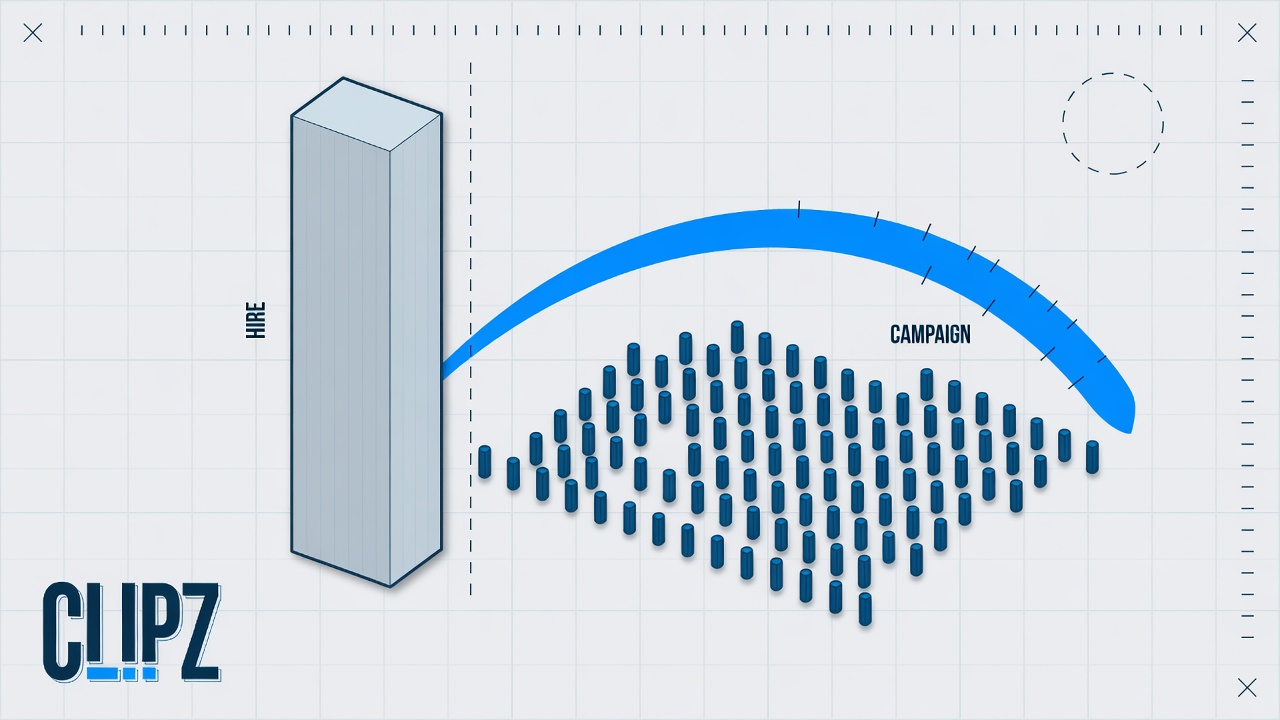
What a hire actually gets you
A person you can brief twice. Usage rights, if you pay for them. A face you can put in a deck.
What it does not get you: volume. Ten hired clippers is ten posts if they all deliver. A campaign is hundreds of native posts you will never have on a call.
Pay them like talent if you need talent. Pay per view if you need reach. Mixing the two in one invoice is how you cannot tell what worked.
The brief, whether you hire or not
What the clip must include. What it must not. Which platforms. Which countries. Whether a face is required (usually it should not be). Where the assets live. How approval works, and how fast.
If you cannot write that in one page, you are not ready to hire anyone. You will spend the relationship explaining what you meant.
Do not send a script. The moment a clip sounds written, it is an ad with worse production. Say what you would rather not see. Leave the rest.
What to expect in week one
Silence, then a burst, then a wait. Clippers who opted into a campaign post when they post. Hired clippers post when the contract says, and then you discover they are late.
Approval takes time if you insist on seeing every cut. That is your bottleneck, not theirs. Batch it.
Some clips will miss. Rejection with a reason is the product working. A hire who cannot take a note is a bad hire. A campaign clip that misses just does not earn.
Mistakes that look like "clipping does not work"
Hiring people whose audience is not in your market, then judging the channel on tourist views.
Paying a flat fee and hoping for views. You bought a post, not reach.
Requiring a following. Short-form distribution is not followership. Clipping with zero followers is the clipper-side version of that fact.
Never running a campaign at all, only a roster, then saying clipping is expensive. You priced it like influencers because you hired it like influencers.
Common questions
Should I recruit clippers off Discord and TikTok myself?
You can. You then become operations: contracts, payouts, chasing, arguments about views. A campaign platform exists so you do not have to. Recruiting yourself makes sense when you need a tiny set of people with a specific look and you are willing to run payroll for it.
Do I need a contract for a campaign?
You need rules the clipper can read before they cut: the brief, the rate, the countries, the approval. That is not the same as a talent agreement with usage and exclusivity. If you want usage, buy usage. Do not hide it in campaign terms nobody will notice.
How many clippers is enough?
For a campaign, you do not pick a headcount. You pick a budget and a brief. Headcount is what you count afterwards. For hires, start with fewer than you think and see if they deliver. Ten flaky people is worse than three reliable ones, and neither replaces a campaign.
Can I hire CLIPZ clippers directly?
If you want a named creator on a contract, that is a different deal than a campaign. Run the campaign for volume. Hire separately for a face. Do not raid a campaign to undercut the rate you just set.